
Most home service businesses finance their vans, trucks and tools with equipment financing, cover payroll and parts through slow months with a line of credit, use revenue-based financing for quick needs that pay back within a season, and turn to SBA or bank loans for large purchases such as buying out a competitor. That holds for HVAC, plumbing, electrical, roofing, landscaping, cleaning and pest control companies alike, because they share one cash-flow problem. The truck, the tools, the parts on the shelf and a new technician's first weeks of wages are all paid for before the first invoice goes out, and the weather affects when the work comes in.
Below, we go through how each type works for home service companies and which jobs it fits. Our home services funding page has a shorter overview, and if most of your work is new building for general contractors, our construction funding page is the better fit.
Cash flow problems in a home service business
Residential customers usually pay at the door when the job is done, so deposits come in most weeks, but the big costs come first. A new van has to be bought and fitted out before it can go out on a job, a replacement furnace or condenser is bought before it is installed, and commercial accounts, property managers and builders pay on terms, often weeks after the work is finished.
The seasons also change how many people these companies employ. Bureau of Labor Statistics payroll counts, before seasonal adjustment, show landscaping companies employing about 748,000 people in January 2024 and about 1,014,000 in June (BLS landscaping services series), so the industry added roughly 266,000 workers, about 36%, in 5 months. Roofing contractors grew from about 233,000 to 261,000 between January and July (BLS roofing contractors series), a rise of about 12%, and pest control companies grew by a similar share. Plumbing and HVAC contractor payrolls moved much less, about 5% from January to August (BLS plumbing and HVAC series).
Those extra workers are hired and paid before the busy season brings in the money to cover them. In the Federal Reserve's Small Business Credit Survey, published as the 2025 Report on Employer Firms, 56% of small employer firms named paying operating expenses as a financial challenge and 51% named uneven cash flow. When firms in earlier rounds explained why they expected lenders to turn them down, some cited irregular cash flow, and the report gives a seasonal business as its example.
The main ways to finance a home service business
Equipment financing for service vans, trucks and tools
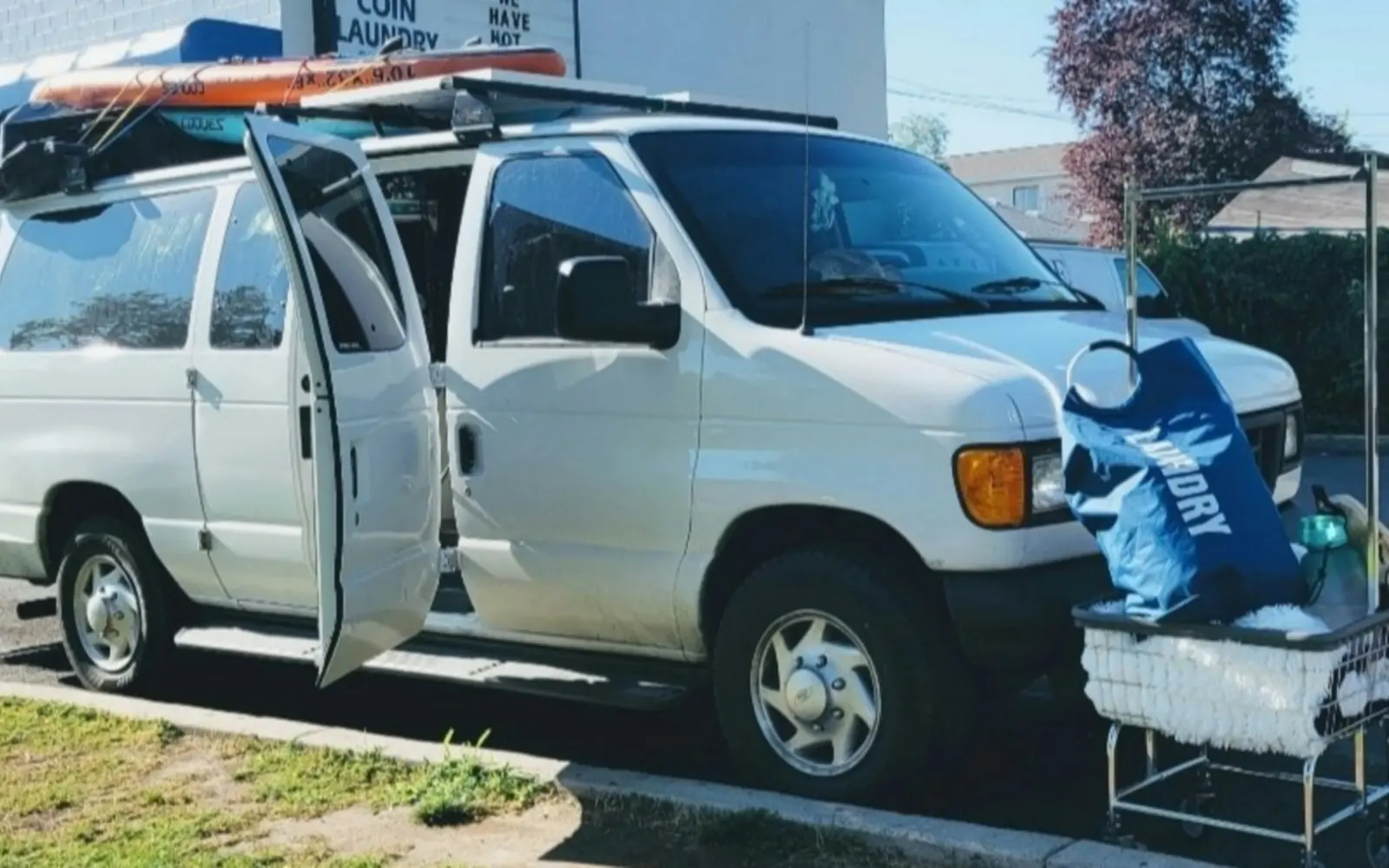
Equipment financing pays for a specific asset and uses that asset as security, which makes it the usual way to finance a service van. Cargo vans, box trucks, bucket trucks, sewer cameras, jetters, zero-turn mowers and truck-mounted carpet units all fit, and offers through our network typically come back within 1-2 business days. Because the funder can take the equipment back if payments stop, it is easier to get than most unsecured credit. In the Fed survey, 68% of applicants for auto or equipment loans were fully approved, the highest share of any product it lists, against 47% for business lines of credit and 32% for SBA loans.
A van you will use for years should be paid for over years, so the payment stays small compared with what the van brings in each month. Our equipment financing page lists what it covers, and our guide to how equipment financing works covers leases, down payments, used equipment and Section 179.
A line of credit for payroll, parts and commercial jobs
A line of credit gives you a limit, up to $2,000,000 through our network, and you draw only what you need. You repay what you drew on a weekly or monthly schedule, and you can draw that amount again as you repay. For a home service company, a line suits the costs that come up every year, such as wages for new technicians before the busy season, a stock order of condensers or water heaters, or the units for a commercial install that the property manager will pay for a month after it is finished. Our line of credit page covers limits and repayment.
Revenue-based financing, or a merchant cash advance
With revenue-based financing, a funder buys a share of your future sales at a discount. You receive a lump sum, and the funder collects a larger fixed total by daily or weekly debit from your business account. Advances arranged through us run from $5,000 to $2,000,000, typically fund in 1-2 business days, and usually need no collateral. They are priced with a factor rate, so a $30,000 advance at a factor rate of 1.35, as an example, means $40,500 paid back in total. In the Fed survey, 33% of merchant cash advance applicants were fully approved and 9% were denied, while the other 58% were approved for part of what they asked for.
An advance suits a short, specific need with a quick payoff, such as a truck engine that fails in July, while anything that takes years to pay for itself fits equipment financing or a longer loan better. Our revenue-based financing page covers amounts and fit.
SBA and bank loans
SBA and bank loans take weeks, and lenders ask for tax returns, a personal financial statement and a schedule of your current debts. They also have the longest terms. The SBA's 7(a) program lends up to $5 million for working capital, machinery and equipment, real estate, refinancing business debt, and complete or partial changes of ownership, which makes it the usual choice for buying a shop and yard or another company outright. Our SBA and bank loans page lists what lenders ask for.
Hiring technicians before the busy season
A new technician costs money for weeks before bringing in any revenue. Take an example HVAC company that hires 3 technicians in April at $28 an hour. Training and ride-alongs for 6 weeks at 40 hours a week come to about $20,000 in wages, before payroll taxes, tools or vehicles. A line of credit fits that cost, because you draw on it in April and May and repay it from the June and July invoices those technicians help produce. These figures are illustrative.
Landscapers have the biggest swing, with crews growing by about a third between January and June. Setting up the line in winter, while business is slow, gives you time to compare offers before payroll is due. We wrote more about that timing in our post on arranging funding before the busy season.
Paying for marketing before the busy season
Home service companies usually pay for marketing before the busy season starts, whether that means search ads in early spring, postcards to past customers before the first heat wave, or a tune-up campaign before heating season. Marketing does not create anything a funder can hold as security, so it fits short-term funding repaid within the season, such as a draw on a line or a small advance repaid from the work it brings in. Work out what each channel costs per booked job before you scale it with borrowed money.
Buying a competitor's book of business
Buying customers someone else already serves is one of the faster ways to add steady work in home services, whether that means a retiring plumber's company, a pest control route or a book of HVAC maintenance agreements. The SBA's guide to buying an existing business lists an established customer base and fully trained employees among the advantages. In the Fed survey, 46% of applicants wanted money to expand, pursue a new opportunity or acquire business assets.
A whole company is usually financed with an SBA 7(a) loan, since the long term spreads the price over the years the customers keep paying. The lender will usually want the seller's financial records as well as yours, so allow several weeks. A small route or a set of maintenance agreements can go on a line of credit or a short advance, as long as those accounts bring in enough during the term to cover the payments. Ask for the renewal history first, since customers who stopped renewing are worth very little.
Seasonal swings and how repayment works
When deposits rise and fall with the weather, how the payment fits a slow month can matter as much as what it costs. A fixed loan payment is the same in February as in July. Many advances set a fixed daily or weekly debit that estimates the agreed share of sales, then let you ask for a lower payment if sales fall, which is called reconciliation.
Take an example lawn and landscape company that deposits $90,000 in June and $35,000 in January. At a 10% share, the funder collects $9,000 in June and $3,500 in January, while a fixed $6,000 a month would take about 7% of June's deposits and about 17% of January's. These figures are illustrative. Before you sign an advance, ask who decides on a reconciliation, what you have to send, and how quickly the payment changes.
What funders look at in a home services file
Every funder sets its own thresholds, and they vary widely. Revenue-based funders base most of their decision on your last 4 months of business bank statements, looking at monthly deposits and how steady they are, how often the balance runs low, and what other funders already debit from the account. Equipment funders also look at the asset itself. Time in business counts with both, and in the Fed survey 48% of applicants with 5 years or less in business were fully approved, against 64% of firms open 21 years or more.
Statements for the 4 months from November through February can make a seasonal company look weaker than it is, so include a year of monthly deposit totals if your sales follow a clear seasonal pattern. Credit matters more to some funders than to others, and most prequalify from bank statements and a soft pull. If you are looking for HVAC or plumbing financing with bad credit, a low score means fewer funders, but it does not rule you out. Our home services funding page explains how we present a file with seasonal deposits.
What home service companies use financing for
| Need | What tends to fit | Why |
|---|---|---|
| A service van, box truck, jetter or commercial mower | Equipment financing | The equipment secures the financing and is paid for over its working years. |
| Wages for technicians hired before the season | A line of credit | You draw during training and repay from the busy months' invoices. |
| Units for a commercial install paid on terms | A line of credit | You repay the draw when the account pays. |
| A truck breakdown in peak season | Revenue-based financing | The money typically arrives in 1-2 business days. |
| Buying a competitor or a route | An SBA 7(a) loan for a whole company, a line or advance for a small route | The term should match how long the acquired customers keep paying. |
Funding we do not arrange
We do not offer some types of funding that home service companies often use. Invoice factoring, where you sell unpaid commercial invoices for cash now, is available from factoring companies. Consumer financing that lets homeowners pay for a new system or roof over time comes from consumer lenders. License and permit bonds come from surety companies and insurance agents. We can talk through how these work with a line or equipment financing, but we do not provide them.
Mistakes that cost home service companies the most
The most common mistake we see is paying for a long-lived asset with short-term funding. A van bought with an advance has to be paid off within months from current deposits, while equipment financing would spread the same cost across the years the van is in use.
The second is stacking advances in the slow season. Each new advance adds another debit to the same account, and a second-position offer is usually priced higher because that funder is repaid after the first one. If you already have more than one, consolidation replaces them with one weekly or monthly payment on a longer term, with the new funder paying the old ones directly, though the total cost may not go down.
The third is signing the first offer without comparing it. Offers on the same file can differ in total payback, payment frequency and early payoff terms, and for a seasonal business a weekly payment can be easier to manage in slow weeks than a slightly cheaper daily one.
How to apply for home services financing
- Fill out the short application with your monthly revenue, time in business and what the money is for. There is nothing to pay to apply or to see offers, and no obligation to accept one.
- Add your last 4 months of business bank statements as PDFs. For an SBA or bank loan, have tax returns, a personal financial statement and a list of current debts ready as well.
- We send your file to the funders in our network, show you all their offers together, and go through the total payback, payment and early payoff terms with you before anything is signed.
- Most applicants are funded within 1-2 business days of choosing an offer, and some the same day. SBA and bank loans take several weeks.
Say what the money is for when you apply, because a new van and a payroll gap need different products and often different funders. To talk it through first, call us at (818) 351-0225.
Questions home service owners ask about financing
How do you finance a service van for a plumbing or HVAC business?
Most companies use equipment financing, which uses the van as security, spreads the cost over the years you will use it, and usually brings offers within 1-2 business days.
Can an HVAC or plumbing company get financing with bad credit?
Many can, with fewer options. Revenue-based and equipment funders focus on bank deposits and the equipment itself, so a low score means fewer funders, but it does not rule you out.
Is a merchant cash advance a good idea for a landscaping or HVAC business?
It can be for a short, specific need with a quick payoff, such as a peak-season truck repair. Vans, buildings and acquisitions usually fit longer-term financing better, and before you sign, check the total payback, payment frequency and reconciliation terms.
Can I use an SBA loan to buy another HVAC, plumbing or landscaping company?
The SBA 7(a) program covers complete or partial changes of ownership and lends up to $5 million, which makes it the usual choice for buying a whole company, though the lender will ask for the seller's records as well as yours.
Does applying for home services financing hurt my credit score?
Getting matched with funders does not need a hard credit pull, since most prequalify from bank statements and a soft pull. A funder may run a hard pull in final underwriting, and you will know before it does.